Why Small Elderly Care Homes Are Perfect for Movement and ADL Support
Business Name: BeeHive Homes of Raton
Address: 1465 Turnesa St, Raton, NM 87740
Phone: (575) 271-2341
BeeHive Homes of Raton
BeeHive Homes of Raton is a warm and welcoming Assisted Living home in northern New Mexico, where each resident is known, valued, and cared for like family. Every private room includes a 3/4 bathroom, and our home-style setting offers comfort, dignity, and familiarity. Caregivers are on-site 24/7, offering gentle support with daily routines—from medication reminders to a helping hand at mealtime. Meals are prepared fresh right in our kitchen, and the smells often bring back fond memories. If you're looking for a place that feels like home—but with the support your loved one needs—BeeHive Raton is here with open arms.
1465 Turnesa St, Raton, NM 87740
Business Hours
When households begin to look seriously at senior care, two useful concerns normally drive the search:
Can my parent still move safely?
And who will aid with the basics of daily life when they cannot?Mobility and activities of daily living (ADLs) are the spinal column of independent living. When those start to decrease, the distinction in between a great and poor care environment ends up being very apparent, extremely quick. Over several years dealing with older adults and their households, I have seen small elderly care homes quietly outshine bigger centers in exactly these areas.
This is not about chandeliers in the lobby or a complete calendar of events. It is about who is really there at 6:30 a.m. When your mother needs assistance to stand, or at midnight when your father with Parkinson's freezes in the hallway, unable to take a step.
Small homes tend to manage those moments better. Here is why.
What "Small Elderly Care Home" Really Means
The terminology can be confusing. Depending upon your state or nation, a small elderly care home may be accredited as:
- a small assisted living residence
- a residential care home
- a board and care home
- an adult family home
Although the guidelines differ, what joins these designs is scale. Rather of 80 or 120 locals, a small home usually supports in between 4 and 16 older adults, often in a transformed single family home or a purpose developed small residence.
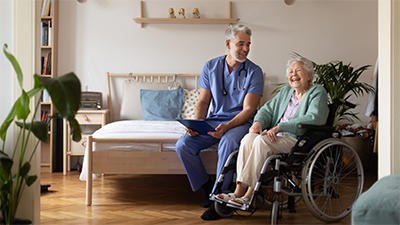
Daily life feels closer to a family than an organization. You see it in the sounds and rhythms: one kettle boiling, a television in the living room, a caretaker chatting with a resident while folding laundry. This physical and social scale ends up being a major advantage when movement declines and ADL help ends up being more complicated.
Why Mobility and ADLs Sit at the Center of Elderly Care
Before exploring why small homes work so well, it assists to be specific about what we are talking about.
Mobility covers a spectrum:
- transferring in and out of bed or a chair
- walking with or without an assistive gadget
- climbing a couple of steps
- getting in and out of a car
- turning and repositioning in bed
ADLs are the bedrock of daily function:
- Bathing and showering
- Dressing and grooming
- Toileting and continence
- Eating and drinking
- Basic mobility and transfers
When somebody moves into assisted living or another senior care setting, families often concentrate on medication management or social activities. 6 months later, what they talk about is whether personnel can safely assist mom into the shower, or if dad has stopped strolling due to the fact that "it is simpler for staff to wheel him."
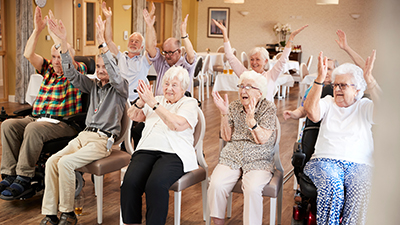
Loss of movement and ADL independence hardly ever takes place over night. It deteriorates through hundreds of small moments. Perhaps the walker is constantly just out of reach. Maybe personnel are hurried and begin doing tasks for the resident rather than with them. Maybe there is a long walk to the dining-room and nobody to rate it properly.
Small elderly care homes are developed, nearly by accident, to handle those micro minutes more attentively.
The Power of Proximity: Design and Daily Flow
One of the most striking distinctions between a small care home and a larger center is easy distance. In a traditional assisted living structure, I have actually measured 200 to 300 feet from a resident's space to the dining-room. Add elevators, long passage stretches, and doorways, and that can feel like a marathon for somebody with arthritis or heart failure.
In a small home, nearly everything is within 20 to 40 feet:

- bedrooms clustered near the primary living area
- dining table within sight of the cooking area
- bathrooms near to bed rooms, frequently shared in between two rooms
For movement and ADL assistance, that distance changes the entire equation.
A caretaker hears the walker scraping on the wood and immediately actions in to provide a steady arm. The individual who needs a toileting tip passes the restroom a number of times a day as part of the natural family rhythm. If a resident with moderate dementia forgets where the dining table is, they can still orient aesthetically from the bedroom door.
The physical layout likewise makes it simpler to include motion into the day. I typically encourage caregivers in small homes to use "micro strolls" instead of formal exercise sessions. Instead of scheduling 30 minutes in a fitness space, they walk homeowners to the yard for 5 minutes of fresh air, or do 2 laps around the living location before taking a seat for lunch. When everything is near, these littles motion become practical, even for frail residents.
Staff Ratios and Real Attention
The most constant advantage I have actually seen in smaller elderly care homes is staffing. It is not just about the number of people are on task, but where they are physically and what they are accountable for.
In a 60 bed assisted living structure at night, you may have two caregivers on a flooring plus a med tech drifting between floorings. Those caretakers are spread out across long hallways, with citizens they might not know very well. Responding to a call light can mean strolling the length of the building.
In a 6 or 8 resident home, a single caregiver can hear a resident attempting to get up from a recliner chair, or see someone beginning to stand without their walker. That early visual hint enables preventive assistance instead of crisis response.
Faster reaction times make a measurable distinction for movement and ADLs:
- fewer falls when someone tries to toilet individually
- less incontinence when staff can respond to the very first request, not the 3rd
- less reliance on bed alarms and other invasive gadgets
- more confidence for homeowners who understand someone is nearby
Over time, those experiences shape how ready an older grownup is to attempt strolling to the restroom or standing to dress. If each attempt is consulted with calm, prompt assistance, they are more likely to keep attempting. If efforts result in slow responses or embarrassing accidents, numerous quietly stop attempting to move and delay completely to staff. That is when mobility collapses.
Familiar Faces and Consistent Care
ADL assistance is intimate. Being bathed, toileted, or dressed by a rotating cast of strangers is not just uncomfortable, it is inefficient. Individuals hold back, they are less likely to interact pain or lightheadedness, and they in some cases decline help altogether.
Small elderly care homes frequently keep a core group of 4 to 10 caregivers, with fairly little turnover compared to large senior care homes. Citizens see the very same individuals across early mornings, evenings, and weekends. That familiarity has several advantages for mobility and ADL support.
First, caretakers develop a very in-depth sense of each resident's "normal." They understand if Mrs. Patel typically needs an one person help to stand, and can rapidly spot when she unexpectedly needs more assistance, possibly showing a brand-new infection or medication adverse effects. I have actually seen small home caretakers pick up on early pneumonia just due to the fact that "his transfer just felt different today."
Second, homeowners are more accepting of aid when they understand who is supplying it. A happy retired teacher might at first refuse bathing aid, however over weeks will build trust with one caretaker and eventually accept support with washing her back or feet. That level of cooperation keeps hygiene and skin stability undamaged, minimizing the danger of pressure injuries or infections.
Finally, constant caregivers can construct mobility assistance into existing routines in an extremely individual method. They understand who delights in keeping the kitchen area counter for balance practice while "helping" with meal prep, or who likes to stroll the corridor to take a look at household pictures every evening.
Mobility Support: More Than Just a Walker
Many households assume that as long as a center provides a walker or wheelchair, movement requirements are covered. In practice, good movement support looks really different, particularly in a smaller home.
The strongest small homes deal with mobility as an everyday treatment chance rather than a one time devices purchase. A resident may begin their stay requiring two people to assist them stand. Within weeks, with repeated brief session and confidence structure, they may progress to an one person stand pivot transfer.
Small homes can make this sort of development due to the fact that:
- staff exist throughout almost every transfer and can coach method
- distances are brief so walking efforts feel safe and manageable
- there is flexibility to change the pace without locking into stiff schedules
In one 10 bed home I dealt with, we had a resident with innovative COPD who insisted she "might not stroll." In the big assisted living where she had stayed formerly, personnel often used a wheelchair for speed. In the smaller home, caretakers motivated her to stroll simply from the recliner chair to the restroom sink, with a chair positioned halfway in case she required to sit. Within a month she was strolling several times a day, pleased with each small distance.
Safe mobility also depends on clear pathways and basic environments. Small homes are simpler to keep uncluttered, and staff are most likely to discover when a toss carpet curls or a cable crosses a corridor. That continuous, informal environmental scanning is tough to duplicate in large complexes.
ADL Assistance as Relationship, Not Job List
On paper, ADL assistance in assisted living and small homes often looks comparable. Both might list assist with bathing two times weekly, everyday dressing, and toileting as needed. On the flooring, nevertheless, the experience can be rather different.
In a larger senior care setting with many homeowners per caretaker, ADL assistance can end up being extremely job oriented: "I have 10 residents to get up and dressed before breakfast." This pressure encourages speed. Caregivers might lay out clothes, dress the resident quickly, and proceed. It is effective, but it silently erodes skills.
In a small elderly care home, the same task may include directing the resident to select their clothing, sit at the edge of the bed, and pull on their own shirt with support only for buttons or socks. These differences sound subtle, however they maintain fine motor skills, balance, and a sense of autonomy.
Bathing is another area where the small home model shines. Numerous older grownups fear falls in the shower more than almost anything else. In smaller homes, restrooms are typically simply a couple of steps from the bed room, and caretakers can embellish regimens. Some residents choose night baths when they are less hurried, others do much better in the early morning after medications. This flexibility is much easier to achieve when you are coordinating 6 homeowners instead of 60.
Toileting assistance is likewise naturally more responsive. Rather than relying greatly on "every two hours" scheduled toileting, caregivers can observe individual patterns. If Mr. Gomez constantly needs the washroom after breakfast coffee, somebody can be prepared at that time, reducing both mishaps and unneeded journeys that tire him out.
Safety Without Over Restriction
Families often stress that a small elderly care home might be "less safe" than a bigger, more medical looking structure. In reality, safety has to do with systems and habits, not square footage.
Smaller homes have some integrated in security advantages for mobility and ADLs:
- Staff can aesthetically examine residents more often without it feeling intrusive.
- Moving someone with a walker across a living room is more secure than a long corridor trek.
- Residents hardly ever deal with crowds or congested spaces that increase fall threat.
- Noise levels are lower, which helps homeowners with dementia stay calmer and more cooperative during care.
The flipside of safety is over limitation. In some settings, out of fear of falls or liability, staff end up doing nearly everything for locals. Walkers remain parked in corners, and wheelchairs end up being the default.
In well handled small homes, there is more room for balanced judgment. A caregiver who understands a resident's history can decide when to walk side by side with a gait belt and when to allow a short, monitored independent walk. They work together with physical and physical therapists who visit periodically, then carry over those suggestions into everyday routines.
I have seen citizens in small homes continue to utilize stairs, with rails and help, long after they would have been disallowed from stairwells in larger senior living structures. That kept capability matters for quality of life and for circulation, strength, and balance.
How Small Homes Support Cognition Together With Mobility
Mobility and ADLs do not live in a vacuum. Cognitive status influences both. Lots of small elderly care homes serve homeowners with mild to senior living moderate dementia, and some concentrate on memory care.
For an individual with dementia, complex buildings can be disabling. Long, identical corridors trigger confusion. Elevators are hard to navigate. Citizens get lost looking for the dining-room or their own room, which results in frustration and, frequently, decreased movement.
A small home's easy layout supports cognition and mobility together. A resident can usually see the kitchen area, living space, and typically the garden from a central area. They find out the area quickly and can move more confidently within it. Less people likewise implies less faces to track, which minimizes agitation.
During ADL jobs, familiar caregivers can use personalized cues. They understand that Mr. Chen responds much better if you play his preferred 1960s playlist throughout bathing, or that Mrs. Andrews requires a step by action verbal prompt while she brushes her teeth. These small cognitive supports make the physical task more secure and less distressing.
Because small homes function more like homes, residents with dementia typically participate in light chores within their capability: folding towels, setting napkins on the table, watering plants. These activities provide natural motion that feels purposeful rather of therapeutic.
Respite Care in Small Residences: A Test Drive for Families
Many families first encounter small elderly care homes through respite care. A parent might need a week or a month of assistance after a hospitalization, or while the primary household caretaker takes a break.
Respite remains in a small home can be especially powerful for comprehending how mobility and ADL needs are handled. With just a handful of homeowners, personnel rapidly learn more about the short-term visitor and can adjust routines within days. I have seen respite locals get here requiring substantial support, then leave strolling more steadily and accepting help more calmly due to the fact that the environment reduced their stress.
Respite care likewise offers households a possibility to observe:
- how often staff walk with locals rather than defaulting to wheelchairs
- how toileting and bathing are arranged (or flexibly handled)
- whether citizens seem rushed during morning and night routines
- how caregivers manage resistance or worry throughout ADL tasks
For adult children who are not sure about moving a parent into long term senior care, a positive respite experience in a small home can be an eye opener. It reveals what genuinely customized mobility and ADL support looks like, instead of what is typically promised in shiny brochures.
Trade Offs and Limitations of Small Elderly Care Homes
No care model is ideal. While I see clear benefits of small homes for movement and ADLs, there are sincere trade offs to consider.
Medical intricacy is one. Some small homes deal with locals with relatively advanced medical requirements, including feeding tubes or complex wound care, but many do not. A very clinically fragile person might still be better served in a competent nursing facility or a larger assisted living with strong on site nursing.
Staffing irregularity is another danger. The very best small homes have steady, well qualified caregivers and strong oversight. The worst are basically boarding houses with minimal guidance. Due to the fact that the setting is smaller, one weak manager or untrained caregiver can have an outsized impact.
Amenities are likewise modest. If somebody enjoys the idea of a health club, swimming pool, and several dining places, a larger senior care community may be more enticing, though those functions typically matter less to people with significant mobility and ADL needs.
Finally, cost structures vary. In some areas, small residential care homes are cheaper than big assisted living facilities; in others, they are equivalent or perhaps higher, especially if they offer high staffing ratios and comprehensive hands on assistance.
The secret is to judge the particular home, not the classification, and to concentrate on what matters most for the resident's daily functioning.
What to Search for When You Tour a Small Elderly Care Home
When families tour, they are often distracted by decoration or the charm of a yard garden. Those things are pleasant, but the genuine evaluation for movement and ADL assistance takes place in quieter details.
Consider this short list as you stroll through:
- Do you see caretakers walking alongside locals, or primarily pushing wheelchairs?
- Are restrooms and bedrooms close together, with grab bars and non slip floor covering?
- Does staff discuss citizens in specific terms, or just in generalities?
- Are citizens tidy, appropriately dressed, and wearing correct shoes?
- When you ask how they handle a fall or a brand-new decline in movement, do you get a clear, practical answer?
Spend a bit of time merely sitting in the typical location. You can find out a lot by enjoying how rapidly staff observe a resident beginning to stand, or how they react when someone looks confused about where to go. Listen for your own internal responses: Does this location feel rushed or calm? Does the staff seem to understand who is in the structure at any provided time?
If possible, visit at different times of day. Early morning and night are when the bulk of ADL care occurs, and those are also the times when understaffing, if present, ends up being really visible.
Helping a Parent Shift: Preserving Movement from Day One
Moving into any form of elderly care can inadvertently accelerate loss of function if not managed thoroughly. Households can play a vital role, especially in the first month.
Share particular details with the home about your parent's standard. Not just "requires aid with bathing," but "walks 20 feet with a walker and one person steadying the belt" or "can pull t-shirt over head however requires assist with buttons." Those details assist caregivers avoid underestimating or overstating abilities.
Encourage the home to continue existing regimens that support motion. If your father has constantly taken a short walk after lunch, ask personnel to join him for a short walk at that time. If your mother chooses sponge baths due to fear of showers, discuss this clearly so she does not merely refuse bathing and get labeled "resistant."
Be present where you can throughout the very first couple of days, not to monitor staff, but to supply connection. Your existence typically assures the older adult enough that they will try walking or self care in the new setting rather of withdrawing completely. In time, as trust in the caretakers grows, you can step back.
Most notably, enhance the concept that small successes matter. If you hear that your parent walked to the dining table independently or washed their own face at the sink, highlight that advance when you visit. Older grownups, like anyone else, react powerfully to genuine acknowledgment.
Why Small Residences Frequently Age Better With the Resident
One of the peaceful virtues of small elderly care homes is how well they adjust as needs change. A resident might get in for short term respite care after a fall, stay for several months of assisted living level assistance, then continue living there through advanced decline.
Because the scale makes love, shifts frequently feel smoother. When somebody who utilized to walk individually now needs a walker, there is no need to relocate to another wing. When ADL requires grow from cueing to hands on assistance, the very same core caregivers simply change their technique and time allocation.
For households, this continuity implies less disruptive moves. For the resident, it indicates they can face increasing dependence on familiar ground, surrounded by individuals who know their history, humor, and preferences. That psychological stability supports cooperation with care, which straight improves the quality of mobility and ADL assistance.
In completion, the case for small elderly care homes in the context of mobility and ADLs is not abstract. It appears in very normal, very human moments: a safe transfer rather of a fall, a relaxed shower instead of a worried battle, a short walk in the garden instead of another day in bed.
For many older adults, especially those who value familiarity, individual attention, and preserved function over resort design amenities, that quieter, smaller setting ends up being exactly the right size.
BeeHive Homes of Raton provides assisted living care
BeeHive Homes of Raton provides memory care services
BeeHive Homes of Raton provides respite care services
BeeHive Homes of Raton supports assistance with bathing and grooming
BeeHive Homes of Raton offers private bedrooms with private bathrooms
BeeHive Homes of Raton provides medication monitoring and documentation
BeeHive Homes of Raton serves dietitian-approved meals
BeeHive Homes of Raton provides housekeeping services
BeeHive Homes of Raton provides laundry services
BeeHive Homes of Raton offers community dining and social engagement activities
BeeHive Homes of Raton features life enrichment activities
BeeHive Homes of Raton supports personal care assistance during meals and daily routines
BeeHive Homes of Raton promotes frequent physical and mental exercise opportunities
BeeHive Homes of Raton provides a home-like residential environment
BeeHive Homes of Raton creates customized care plans as residents’ needs change
BeeHive Homes of Raton assesses individual resident care needs
BeeHive Homes of Raton accepts private pay and long-term care insurance
BeeHive Homes of Raton assists qualified veterans with Aid and Attendance benefits
BeeHive Homes of Raton encourages meaningful resident-to-staff relationships
BeeHive Homes of Raton delivers compassionate, attentive senior care focused on dignity and comfort
BeeHive Homes of Raton has a phone number of (575) 271-2341
BeeHive Homes of Raton has an address of 1465 Turnesa St, Raton, NM 87740
BeeHive Homes of Raton has a website https://beehivehomes.com/locations/raton/
BeeHive Homes of Raton has Google Maps listing https://maps.app.goo.gl/ygyCwWrNmfhQoKaz7
BeeHive Homes of Raton has Facebook page https://www.facebook.com/BeeHiveHomesRaton
BeeHive Homes of Raton won Top Assisted Living Homes 2025
BeeHive Homes of Raton earned Best Customer Service Award 2024
BeeHive Homes of Raton placed 1st for Senior Living Communities 2025
People Also Ask about BeeHive Homes of Raton
What is BeeHive Homes of Raton Living monthly room rate?
The rate depends on the level of care that is needed (see Pricing Guide above). We do a pre-admission evaluation for each resident to determine the level of care needed. The monthly rate is based on this evaluation. There are no hidden costs or fees
Can residents stay in BeeHive Homes until the end of their life?
Usually yes. There are exceptions, such as when there are safety issues with the resident, or they need 24 hour skilled nursing services
Do we have a nurse on staff?
No, but each BeeHive Home has a consulting Nurse available 24 – 7. if nursing services are needed, a doctor can order home health to come into the home
What are BeeHive Homes’ visiting hours?
Visiting hours are adjusted to accommodate the families and the resident’s needs… just not too early or too late
Do we have couple’s rooms available?
Yes, each home has rooms designed to accommodate couples. Please ask about the availability of these rooms
Where is BeeHive Homes of Raton located?
BeeHive Homes of Raton is conveniently located at 1465 Turnesa St, Raton, NM 87740. You can easily find directions on Google Maps or call at (575) 271-2341 Monday through Sunday 9:00am to 5:00pm
How can I contact BeeHive Homes of Raton?
You can contact BeeHive Homes of Raton by phone at: (575) 271-2341, visit their website at https://beehivehomes.com/locations/raton/, or connect on social media via Facebook
Sugarite Canyon State Park provides beautiful mountain scenery and accessible areas suitable for planned assisted living, senior care, and respite care enrichment trips.